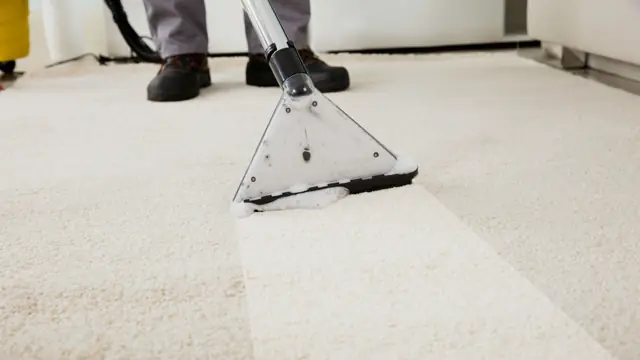
Most machine-made rugs of nylon, polyester or polypropylene can be cleaned safely in your home, much like wall-to-wall carpet. Rugs made of viscose (often sold as art silk or bamboo silk), real silk, jute or sisal, rugs with dyes that bleed, and rugs with heavy pet urine contamination need special handling. The fiber, the backing and the dyes decide the method, not the price tag or how the rug looks.
Start by finding out what the rug is made of
Flip the rug over and look at the back, and check for a label near a corner. You are looking for three things:
- Fiber. The label may say nylon, polypropylene (olefin), polyester, wool, cotton, viscose, rayon, bamboo silk, art silk, jute or sisal.
- Construction. A woven or knotted rug shows the pattern clearly on the back. A tufted rug usually has a canvas or cloth backing glued over the back, which hides the pattern.
- Condition. Note loose fringe, thin spots, curling edges, or a backing that crackles or sheds powder when you bend it.
If there is no label, a technician can usually identify the fiber with a quick look and a simple test. Tell them where the rug came from and how old it is. A rug bought online as "silk" for a low price is very often viscose, and that one detail changes how it should be cleaned. The same goes for "wool blend" rugs, which may contain a fair amount of synthetic or rayon fiber.
Rugs that usually clean well in your home
| Rug type | Why it is usually fine |
|---|---|
| Machine-made polypropylene | Does not absorb water or dye easily, dries fast |
| Machine-made nylon or polyester | Handles hot water extraction like synthetic carpet |
| Most machine-made wool rugs | Clean well with wool-safe products and careful drying |
For in-home cleaning, the technician should protect the floor underneath. Hardwood and luxury vinyl do not like sitting under a damp rug, so rugs are cleaned over a barrier and kept off the floor until they are dry enough. Rugs placed back too soon can leave moisture marks or dye on wood floors.
Rugs that need special handling
Viscose, rayon and "bamboo silk"
These rugs are soft and shiny when new, which is why they are popular, but the fiber is weak when wet. Water can cause yellowing or browning, crushing and a permanent change in texture. Even a glass of water spilled on one can leave a mark. These rugs need a very cautious, low-moisture approach, and some damage that already happened cannot be reversed.
Jute and sisal
Plant fibers like jute and sisal stain from water itself. A wet cleaning can leave brown watermarks and shrink the rug. These usually call for dry or very low-moisture methods and spot treatment.
Hand-tufted rugs with glued backings
Many wool rugs sold today are hand-tufted with a latex adhesive holding the tufts and a cloth backing in place. As these age, the latex can break down, crumble and give off a stale smell when wet. If the backing is already failing, cleaning can make the problem more obvious.
Hand-knotted and older rugs
Hand-knotted wool rugs are often very durable, but older ones may have dyes that bleed, cotton foundations that brown if they dry slowly, and fringe that needs gentle care. These deserve a dye test and a slower, more careful approach.
Rugs with pet urine
Urine soaks through a rug quickly and often into the floor below. Surface cleaning leaves odor behind in the foundation. These rugs need targeted treatment, and the floor underneath should be checked too.
Signs your rug needs more than a basic cleaning
- Colors run when you dab a damp white cloth on a dark area.
- A sour or ammonia smell when the room is humid.
- Yellow or brown areas on a light-colored rug.
- Stiff, crunchy spots in the middle of the rug, often from old pet accidents.
- Fringe that is gray and matted compared to the rest of the rug.
Taking care of rugs between cleanings
Vacuum the face of the rug regularly, and every so often vacuum the back as well, because grit works down through the rug. Rotate rugs once or twice a year so sun from the window and foot traffic do not always hit the same end. Use a rug pad, which keeps the rug from shifting and reduces wear. For spills, blot right away and keep water to a minimum, especially on viscose, jute and sisal.
When to call a pro
Call a professional before you try to wash a rug that is not synthetic, or any rug with urine, bleeding dyes or browning. ProTech will look at the fiber and construction first and tell you honestly which approach makes sense, or if a rug is risky to clean at all. Learn more about our area rug cleaning, and if pets are part of the story, our pet urine and odor treatment. If a damp rug has left marks on the floor beneath it, we also handle hardwood floor restoration.